A force component is the projection of a force vector along a specific coordinate axis. In a Cartesian coordinate system, any force vector can be uniquely decomposed into perpendicular component vectors such that .
Concept Explanation
While Combining Forces describes how we can compile multiple separate forces into a single equivalent resultant vector, force decomposition is the exact opposite process. In physics and engineering, analyzing a single force acting at an angle can be mathematically difficult. Decomposing the force into independent perpendicular components allows us to analyze each direction separately.
2D Decomposition
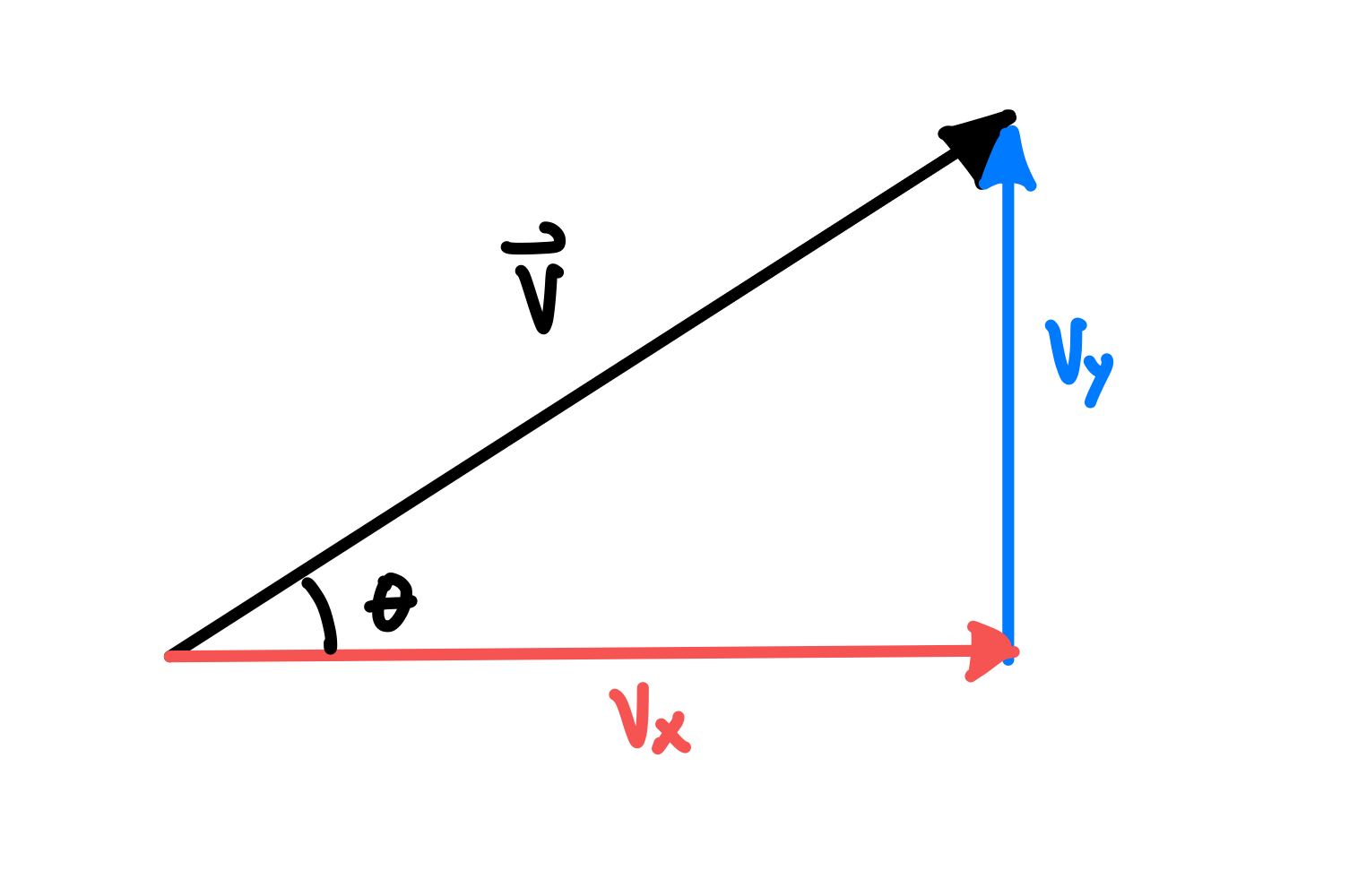
For a 2D force vector with a magnitude making an angle with the positive -axis, the horizontal () and vertical () scalar components are calculated using right-triangle trigonometry:
Resultant Force (Vector Composition)
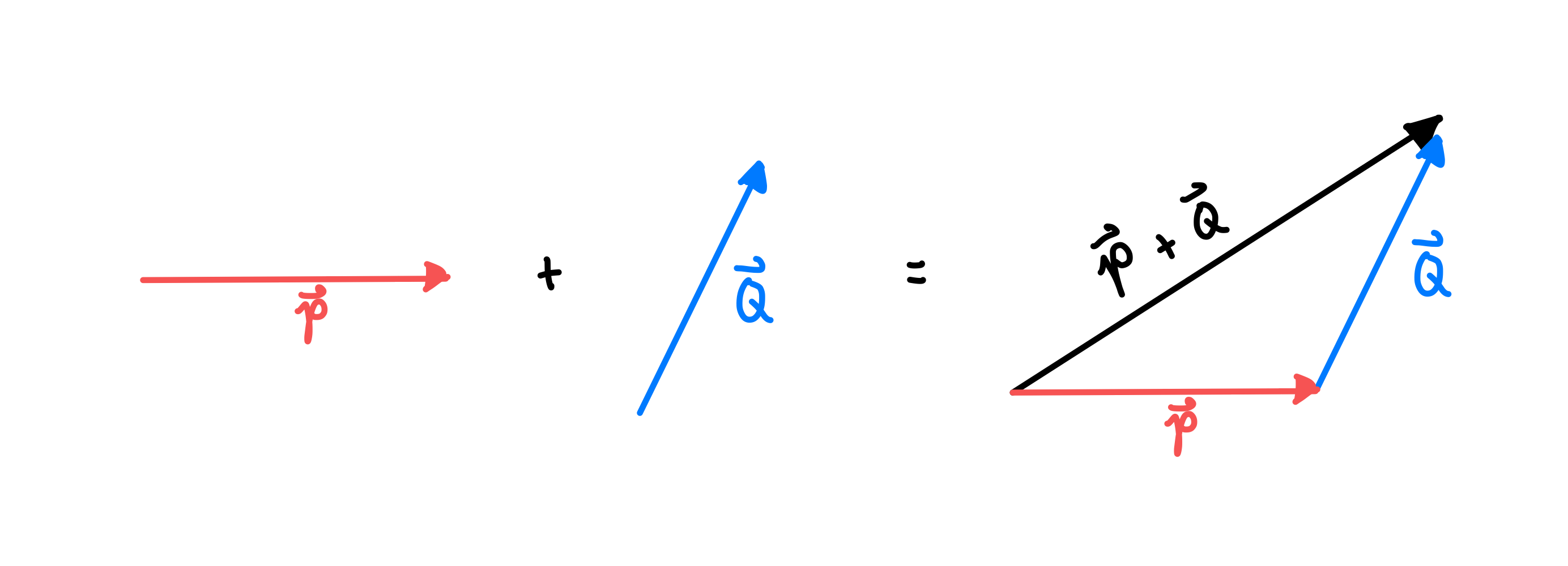
When multiple forces act on a single point (such as a structural joint or a vehicle), the overall effect is described by the resultant force (). We calculate this by adding the corresponding components of the individual forces:
Once the components of the resultant force are found, its overall magnitude and angle can be computed:
Visual / Geometric Intuition
Below is a visualization of a vector decomposed into its horizontal and vertical components along the Cartesian plane:
When adding multiple forces together, they are geometrically arranged "head-to-tail". The sum of their individual components forms the final coordinates of the resultant force:
Engineering Applications
- Structural Analysis (Statics): Standard joint analysis (such as the method of joints for bridge trusses) relies on summing vertical and horizontal force components to zero to guarantee static equilibrium ( and ).
- Aerodynamics & Fluid Dynamics: Decomposing total aerodynamic forces into drag (horizontal component opposing motion) and lift (vertical component supporting weight).
- Civil Rigging & Cranes: Distributing a single gravitational load among multiple angled suspension cables by calculating their individual horizontal and vertical tension components.
Example Problem
A structural joint experiences two forces:
- has a magnitude of pulling up and to the right at an angle of relative to the horizontal.
- has a magnitude of pulling vertically straight down.
Find the component form and overall magnitude of the resultant force vector .
Solution
Step 1: Write each force in component form
For :
For (acting vertically downwards):
Step 2: Add components to find the resultant force
Step 3: Calculate the magnitude of the resultant force
Connections & References
- Parent Concepts: Vectors
- Sub-concepts: Dot and Cross Products
- Related Concepts: Combining Forces
- Course Links: Calc-3 Session 02